Academics & Research – Page 3 – UW Graduate School Skip to content

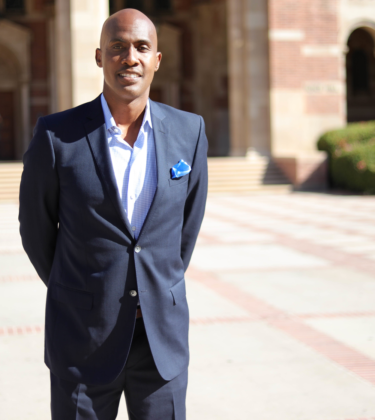
Tyrone Caldwell Howard, Ph.D.

College of Education, 1998

Dr. Howard came to the UW after teaching in elementary school classrooms in Compton, California. Advised by Professor James Banks (the “Father of Multicultural Education), Howard studied multicultural education, academic achievement among African Americans, and equity in the classroom. Howard has continued onto an impressive career as a professor of education at University of California – Los Angeles, where he continues to study race and equity in K-12 education. At UCLA, Howard is the former associate dean of the Graduate School of Education & Information Studies and the founder and executive director of the Black Male Institute. He is frequently asked to present his work across the country and globe. In 2019, Howard was honored with the College of Education’s 2019 Distinguished Graduate Award. We spoke with Howard about how GO-MAP* (then known as the Minority Education Division) enhanced his graduate school experience at the UW, and the program’s lasting influence on his career. 

For me, the Minority Education Division was about family and about community as well as financial support. From a financial standpoint, I was what might be called now a non-traditional student. I had a wife and two kids when I started my graduate degree. 

I had funding through the School of Education but it was not enough. I didn’t want to work three, four or five jobs outside of the UW to make ends meet. So I would go to Cynthia and talk to her about the financial challenges we were facing, and Cynthia would find something. MED was a huge financial support in ways I could not have envisioned when I started graduate school. 

At one point I approached Cynthia because it was a real tight squeeze for my family and I to make ends meet. I was really hesitating to talk to her, because I didn’t know what she would say. Before I met with her, I put together five talking points on the subject. I planned points and counterpoints; I had all these things prepared to say if she said no. 

I went in nervous to our meeting, prepared to hear no. As you probably know, Cynthia has such a calm demeanor. As soon as I brought up my first point, she said yes. She said, I’ll make it happen, and she made it seem like it was so easy. 

That conversation was life changing. It was so important to know that she got it and she made it happen. All the talking points I had prepared, I didn’t have to go through because she was so responsive. 

When I was looking at graduate programs and I visited the UW, there was a group of master’s students in the College of Education who were incredibly helpful. Patricia Halagao, Cynthia Denning Del Rosario, Jim Rodriguez, and Andre Branch. They said, there’s a space for people of color here at the UW. They told me it was a good place to consider because my work – on racial and ethnic diversity in the classroom – would be supported here. It meant a lot to hear current graduate students say that they felt supported on campus. 

As a graduate student, you recognize that the school – for me, both the College of Education and the UW – were predominantly white. If you didn’t find a community of like-minded people, you could feel very isolated and very disconnected. As a person of color, you have to create your own community within the larger community by finding pockets of people who share the same experiences as you. 

MED provided a space where I saw other students of color. With MED students, I didn’t feel like I was alone, and I had people who could relate to being the only or one of the few people of color in their programs. 

What was helpful for me was to come into graduate school with a small group of people who were part of the Office of Minority Recruitment and Retention. That became my community. The folks I worked with in my department knew about the Minority Education Division, Mosaic and other organizations to plug into to find community, so they helped me seek out those opportunities. 

It worked for me, but if you didn’t know how to find that community, you would be on the outside looking in. Now there are more intentional steps and approaches so incoming students of color can be introduced to these units and plugged into communities of color, if they desire to be. 

My involvement with MED has been huge for my career. As a grad student, it was good to be in a place where people helped you to sharpen your ideas and pushed you – always with kindness – to sharpen your methods.

When you’re a graduate student, you’re insecure as a scholar. For me, having people who were part of the UW community who supported my ideas – conceptually and intellectually – allowed me to recognize the importance of my work. Professors such as Jim Banks, Gevena Gay, and Ed Taylor were invaluable and incredibly supportive.

A lot of the work I do now is still tied to equity and inclusion. I wouldn’t be doing this work if I hadn’t had the support I had at the UW. This support let me know that my work matters to the community. I’m forever indebted to the community because of that. 

I hope the university does all it can do to support efforts like GO-MAP. Universities say they value diversity and want it on campus but often offices like GO-MAP are on tight budgets and not receiving the support and recognition they deserve. Initiatives like GO-MAP are often the heartbeats of diversity, the backbone of inclusion and places where students of color can truly feel supported and comfortable. And we should support them accordingly. 

*This story is part of a series celebrating the 50th anniversary of GO-MAP, now known as GSEE. Learn more.
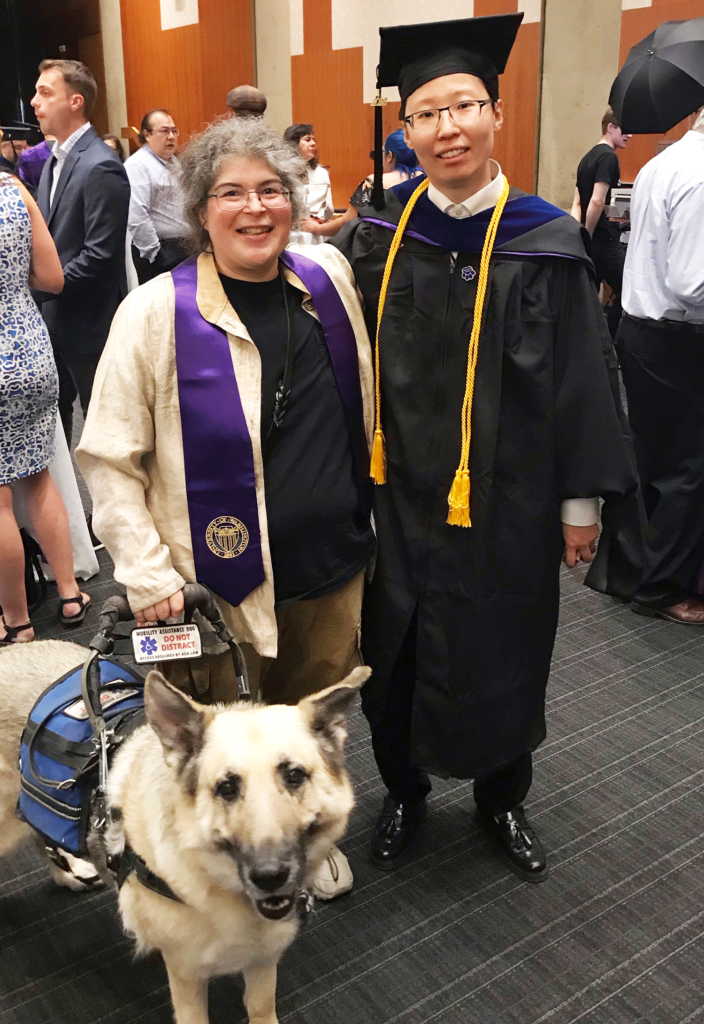
Jessica Yellin, Ph.D.

Mechanical Engineering
BSME – 1989
MSME – 1996
Ph.D. – 2004

For Jessica Yellin, Ph.D., ‘04, GO-MAP* provided emotional support and community as she tackled a challenging graduate school program and cared for her family. 

Yellin describes herself as “a local yocal and kind of a lifer.” Having grown up in the Seattle area, she earned her bachelor’s, master’s, and Ph.D. at the University of Washington in Mechanical Engineering. She was recruited to UW’s engineering department as a senior in high school. 

After earning her bachelor’s degree, Jessica was unsure of her next steps. Several of her family members were sick or injured, and she did not want to leave the area. After several years of working odd jobs and feeling frustrated, her mother persuaded her to return to graduate school at the UW. 

Coming from a low-resourced background that lacked informational support about academia, Jessica says GO-MAP and other programs focused on students of color connected her with resources she might have otherwise missed. 

“Community forums like GO-MAP are key because you get people who recognize that if you’re the first person in your family to go to college, you might not realize the politics or the intricacies of how academia works. If you have folks like the GO-MAP staff who are willing to say: ‘Here’s what you need to do,’ that makes all the difference,” she says. 

The Engineering Department was predominantly white and male, Jessica says – as most Engineering departments in the country were. In 2004, Jessica was one of two Hispanic women across the country to earn a Ph.D. in Mechanical Engineering. She found it difficult at times to be herself in the department. 

“I’m relatively light-skinned, I’m biracial, and I’m ashamed to say that a lot of times I choose to pass because it’s simplest,” she says. 

When Jessica took time away from her studies to care for her family, some faculty and peers questioned her decision. 

With GO-MAP and other campus communities of color, including the UW GenOM Project as well as the Mathematics, Engineering, Science Achievement (MESA) and Minority Scholars Engineering Program, Jessica felt comfortable to be herself. 

Her peers provided her “a community where it’s not considered weird to take time off to support your family,” Jessica says. “When I spoke to my friends who were people of color, they would say, “Of course you have to take time off. These are the people who raised you.” 

When several of Jessica’s family members passed away around the same time and Jessica needed social support, she found the GO-MAP get-togethers were a solace. There, she met several Latinx students from the M.D./Ph.D. program, and they started an informal peer mentorship group. 

A mentor to many graduate students of color herself, Jessica often referred her mentees to Cynthia Morales with questions or concerns. “I always thought of her as a good resource,” she says. 

Since 2011, Jessica has been on disability retirement from the University of Washington. She credits Lisa Peterson from UW GenOM project with helping her through this difficult transition. Jessica continues to mentor students as a volunteer homestay host with the Foundation for International Understanding Through Students (FIUTS).

*This story is part of a series celebrating the 50th anniversary of GO-MAP, now known as GSEE. Learn more.
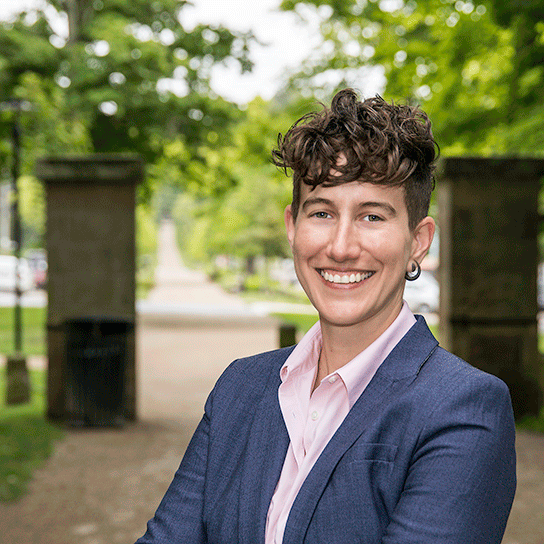
Audra Gray-Dowdy, M.Ed., Ph.D.

College of Education
M.Ed. – 1999
Ph.D. – 2011

As a student, Audra Gray-Dowdy formed an informal network of peers of color to help her navigate graduate school. GO-MAP* helped to formalize these networks and expand their reach beyond her department. 

Through conversations in the GO-MAP office and GO-MAP social events, Gray-Dowdy made connections that showed her “people who look like me do this and finish this process, and I can, too.”

“We really got to know each other well through GO-MAP,” she adds. “There were a lot of real, authentic friendships that came out of GO-MAP and grew from there.” 

For Gray-Dowdy, it was significant that the Graduate School encourages students to build community. When she was a student, and now as an alumni, “I can walk into the Grad School and it’s not like I’m walking into a business office that’s inaccessible to me,” she says. “GO-MAP made the Graduate School feel like home, made me feel like I belonged. Sure it’s a business office but it’s a place where people are welcoming and personable – what other universities have that?” 

After Gray-Dowdy graduated with her master’s, she taught fifth grade in the Compton Unified District in California for several years. When she returned to UW for her Ph.D., she reconnected with the GO-MAP family.

Inspired by the networks of support they received from GO-MAP, Gray-Dowdy and several women of color in Education established a thesis and dissertation writing group. The members met regularly to talk about their research. They helped to hold each other accountable, while also receiving feedback on their research. 

As a Ph.D. student, Gray-Dowdy approached Cynthia Morales (then assistant director) when she was seeking funding or new opportunities. “Just to have her accept me, hear me out, and tell me she would keep her eyes and ears open – it was very comforting to know that,” Gray-Dowdy says. If I hadn’t known her as a grad student, I would have been struggling,” she adds. 

At one point, Gray-Dowdy approached Cynthia because her graduate appointment did not run through the summer and she was seeking work. She earned an appointment to work for GO-MAP during the summer, providing her funding for the summer months. 

As a Graduate Staff Assistant in the summer of ‘00, Gray-Dowdy played an important role in organizing the first Getting Connected – an annual fall event to help graduate students of color meet. She worked alongside Johnella Butler (then director) and Morales to help with the planning for the event. She created brochures and helped put together the event, including choosing the location and ordering the food, 

“I feel a sense of honor when Cynthia says I was part of helping to create Getting Connected, even though its an overstatement,” Gray-Dowdy says. 

Gray-Dowdy contributed to the GO-MAP community in other ways, as well – by mentoring new students of color through the Diversity Ambassadors program.

“I wanted to give all the wisdom I had earned back to people,” she says, adding that “any time GO-MAP asked myself or my peers to contribute, the answer was always yes because we knew connecting students of color to GO-MAP would be a lifesaver for (those students). We didn’t need to be convinced, because we already felt the love from GO-MAP.” 

It’s true, though, that GO-MAP wasn’t just about spreading love. “The goal was for us students of color to get our degrees in a way that still feeds our souls,” Gray-Dowdy says. “This might look like working in communities that are unnoticed, communities we represent, and doing work we feel passionate about. As a student, you feel really feel that GO-MAP is investing in you because they know you’re going to take your degrees and make an impact in your field, and make an impact in your community.” 

After walking with her Ph.D. in 2011, Gray-Dowdy joined the faculty at East Tennessee State University. She is now the Dean of Students at Federal Way Public Schools.

*This story is part of a series celebrating the 50th anniversary of GO-MAP, now known as GSEE. Learn more.

Naomi Campa, M.A., Ph.D.

Department of Classics, 2014

I received a GO-MAP* supplemental grant and later a dissertation fellowship during my time at UW. The fellowship was quite unexpected for me and came at a moment when I was debating whether I would be able to finish my dissertation at all. 

The award had the practical effect of making it financially possible for me to work on my dissertation, but it moreover felt like a real vote of confidence; I felt flattered that my department had nominated me for the award and incredibly honored to have received it. I was working on my dissertation off campus, and the Skype meetings with the rest of the fellows helped me focus on the task at hand and feel connected during the isolated process of dissertation writing. GO-MAP had a crucial role in seeing me to the finish, which I am proud to report I reached in June 2014.

I am now a Visiting Assistant Professor of Classics at Kenyon College. I have a few articles and book reviews published and am working on a monograph developed from my dissertation. 

*This story is part of a series celebrating the 50th anniversary of GO-MAP, now known as GSEE. Learn more.

Tamiko Nimura, Ph.D.

English, 2004

For Tamiko Nimura, Dr. Johnnella Butler’s classes felt like a sanctuary. 

Butler was director of the Minority Education Division (renamed GO-MAP* during her tenure) from 2000–2006. “Dr. Butler not only taught classes that provided community for students of color,” says Nimura, “she was a mainstay support for us.” 

During Nimura’s first year in graduate school, “I was terrified to speak up in classes,” she says. “But I never felt terrified around Dr. Butler. I always felt the comments I made in class were appreciated and welcomed. She was always very generous with her time and feedback, and her comments were always supportive.” 

Nimura turned to Butler to be the chair of her thesis committee, doctoral exam committee and her dissertation committee. She still remembers how tickled she felt when she ran into Butler’s husband and he told her, “Dr. Butler thinks you’re the cat’s pajamas.” 

“To hear that from her husband was really funny and lovely,” she says. 

As director, Butler established student and faculty advisory committees which provided support, ideas and feedback to help build the Minority Education Division’s programming for students of color. Nimura – eager to be involved in efforts to support other graduate students of color – became a member of the Student Advisory Committee. 

That same year, Nimura was passed over for a T.A.-ship by her department. She was one of two students in her cohort who didn’t receive funding that year. “It was very painful,” she says. “It felt like a sign of my worth.” 

Nimura received funding from GO-MAP in her third year, which helped her to continue in her program.

But the GO-MAP community helped her in another way – by providing an outlet. 

Taking classes with Dr. Butler and working on the GO-MAP advisory committee “made me feel I had something to contribute to the UW community, and whether or not I received a T.A.-ship didn’t have to be my only sign of validation of being in academia.” 

The Student Advisory Committee was responsible for getting to know students of color across campus and providing input on the kinds of support they needed. This process led them to develop opportunities for students of color to meet socially – thus, Getting and Staying Connected were born. The committee was also integral in developing in renaming the unit from Minority Education Division to GO-MAP.

On campus, students of color were discussing Initiative 200, which, in 1998, banned affirmative action in Washington state. In September three years later, came the attacks on the World Trade Center in New York. 

“Being a graduate student of color teaching in the wake of September 11 was a painful and difficult thing,” Nimura says. It was especially difficult to discuss issues of race in the classroom.

The GO-MAP office was a haven, a refuge, and a place of nurturing for students during that time. “Going into classes where we may have felt alienated, or teaching undergrads where we might have been instructors of color facing a majority white class – it gave us strength knowing we had a community behind us.” 

GO-MAP also helped students feel empowered to work toward creating a better campus climate, she says. “That feeling that you have some agency and control over a situation goes a long way toward sustaining you,” she adds. 

Since leaving academia in 2011, Nimura has built a freelance writing career with a focus on American Ethnic Studies. She is a community-oriented journalist who writes mostly about and for Asian American artists. She works to serve communities that are often ignored by sharing their stories. 

“Dr. Butler actually taught me a lot about doing work that serves the community,” she says. “She taught me that you don’t forget where you came from.”

*This story is part of a series celebrating the 50th anniversary of GO-MAP, now known as GSEE. Learn more.

How Prof. Houra Merrikh Works

Houra Merrikh, Assistant Professor

Department/program: Microbiology
Research focus: DNA Replication

In a 2016 interview, microbiologist Houra Merrik said her goal is to “be somebody who sets an example and facilitates the system in a way that people that have gone through hardships can bring their abilities to science.” Houra knows what it means to overcome adversity: born in Iran, she immigrated with her family to Turkey at age three. At 16, she moved to the U.S. without her family and put herself through community college by working at restaurants and selling cars. Now, she studies conflicts in the process of cell division: specifically, in the competing processes of replication and transmission. In 2016, she was one of three recipients of the Vilcek Prize for Creative Promise in Biomedical Science.

Work

Give us a one-word description of how you work:

Relentlessly

How do you manage your to-dos?

E-mail Tasks Feature

What are your essential apps, software or tools?

Powerpoint, Outlook, Google Docs

Where do you most often work?

On campus, in my office.

How do you manage your time?

By priority.

What is your best time-saving shortcut?

Short email responses.

What are some of your productivity strategies you’ve honed over your years in academia?

Staggering my tasks.

Life

What mundane thing are you really exceptional at?

Sarcastic jokes

What’s the last thing that made you laugh?

A cat birthday party at a bar.

How do you recharge?

Exercise and sleep.

What’s your sleep routine like?

Six hours a night.

Inspiration

What’s the best advice you’ve ever received?

Follow your heart.

Who’s your support system?

My husband.

What pitfall do you consistently see students falling into?

They lack time management.

What do your most successful students do?

They work hard.

How UW Works was inspired by LifeHacker’s How I Work.

Admissions

[ess_grid alias=”home_page”]

Welcome, we are pleased that you are considering graduate study at the UW! The scope and quality of graduate education at our university is remarkable, as is the caliber of our graduate students.

The UW welcomes and encourages applicants from all areas of the world and actively promotes a diverse student body comprised of different ethnic, socioeconomic, cultural, academic and personal backgrounds.

Understanding the Application Process

Applying for graduate school can seem like a daunting task. Where do you start? What can you expect? How does the process work? Each program is a little bit different, but we’ve put together a page to help you understand the basics of applying for a program at the University of Washington.

Learn more about the application process

International Students

International students often have very specific questions regarding language, financial requirements, and employment opportunities. We’ve put together some information to help answer your questions about being an international student at the University of Washington.

Information for International Students

UW Scavenger Hunt: Letter for Visa Edition

This post has been adapted from the Grad School Guide’s recent exchange with a student.

Dear Grad School Guide,

I am an international student who earned my graduate degree last fall. I attended the UW on a fellowship with a J1 visa, so after graduation I returned to my home country. Now, I would like to come back to the UW for commencement this spring. To be able to attend the commencement, I need to apply for a visitor visa. Because strict visa regulations apply to my home country, I need a letter from the UW stating that I was a student last year and that I’m invited to this year’s commencement.

I have tried contacting International Student Services, but they are not able to provide me with this letter. The Office of Ceremonies usually sends out personalized invites in May, but by then it will be too late for me to apply for a visitor visa.

Any advice? I really want to attend commencement.

Thanks,
Stuck on a UW Scavenger Hunt


Dear Stuck,

I’m sorry that this has been so difficult. I know it can be really frustrating to be sent to many different offices — it feels like a scavenger hunt, and not in a good way!

I am glad that you’ve reached out to the Grad School Guide, as we can help you as you navigate the many offices and resources of the UW.

Since what you need is a personalized letter confirming your graduation and eligibility to attend commencement, I recommend reaching out to the advisor or program coordinator for your department. Maybe you already know someone you were in touch with while you were a student here — they would be a good person to contact. Or, you can most often find the contact for your departmental advisor on your department’s website.

Please keep me posted on the outcome.

Best,
Your Grad School Guide


Hi Guide,

It worked! I was able to obtain a letter from my departmental advisor.

Thanks!
Un-Stuck


Dear Un-Stuck,

So glad to hear it! I’m sure your departmental advisor would be helpful for other questions of this nature, as well.

Please feel free to reach out again with any questions about the UW, or if you find yourself in another scavenger hunt!

Enjoy commencement!

Best,
Your Guide


Ask Your Grad School Guide is an advice column for all y’all graduate and professional students. Real questions from real students, answered by real people. If your Guide doesn’t know the answer, you Guide seeks out experts all across campus to address the issue. (Please note: your Guide is not a medical doctor, therapist, lawyer or academic advisor, and all advice offered here is for informational purposes only.) Ask your Guide a question >

Lead from where you are

Traditional views of leadership suggest that you need a title or status to be a leader. However, true leadership can be seen at every level of a team or organization regardless of title or status. Consider this: are you stepping into your full potential as a leader during your time as a postdoc? Leadership skills are always at the top of the list for any sector in jobs you may be seeking, inside or outside academia. We share insights gleaned from top leaders visiting UW throughout the quarter as part of the Husky Leadership Initiative (and yes, we want to have a postdoc contingent in this next year!)

Purpose: Start with your “why”. The “what” you are doing will change and evolve over time and with different opportunities. But the central purpose to your work, and how you engage with it, will be what opens doors and draws others to you.   

Be curious: There is evidence to show that starting a conversation from a stance of inquiry opens a conversation. This is far more productive than a judgment or accusation, which can close down or narrow a decision. It is more likely to get you where you want to go, and will leave the person with positive regard for you rather than resentment.

Vulnerability: Rather than being a weakness, rumbling with your own vulnerability is one of the most courageous acts there can be. Developing awareness of your vulnerability, rather than guarding against it or pretending it isn’t there can help you to ask for the help you need, seek contributions from others and work toward genuinely co-creating solutions.

Conflict as generative: We often talk about “normalizing feedback” – where everyone has an opportunity to reflect on what’s going well (specifically) and identify a place we can improve. The challenge is transitioning from a culture where conflict has been toxic (judgmental, personal, emotional) to one where it can be healthy.

Superchickens3 don’t win. All of this may seem antithetical to the traditional academic and grant-funded environment we find ourselves in, where competition is the norm. However, research on effective teams and innovative leaders shows that competitive environments become places where people perform at much lower productivity levels: because they are scared, under pressure and not sharing ideas that may grow creative solutions.

Take a moment and reflect on your own teamwork and leadership style. It does not mean being the most charismatic, outgoing or decisive person. Genuine leaders are humble enough to know they do not hold all the answers; they are curious to know what others can bring to the problem or mission at hand. Whatever role you play within your group, you can ask thoughtful questions, invite others to speak and share, value contributions of others, and provide guidance in shaping team or project direction. We believe in you and see you as leaders everywhere throughout our UW ecosystem — thank you.

And thanks to the community leaders who came forward this quarter to generously share their insights about leadership, and the Husky Leadership Initiative.

Deep dive: 

  1. Brene Brown, Dare to Lead. Random House, 2018
  2. Amy Edmundson, Building a psychological safe workplace.
  3. Margaret Heffernan, Why it’s time to forget the pecking order at work. (Opens with the superchicken example if you want to learn more!
  4. Simon Sinek, Start with Why.

Expand your skill set – or just have fun!

As UW postdocs, you are eligible to take classes at the UW. This can be a great way to expand your skills or knowledge base, explore a new discipline or research method, or just take a course of personal interest to you. We often talk about “making the most of your postdoc experience” while here at the UW. The rich array of courses offered here is one such way to accomplish this objective. Take a look at your IDP (you review yours regularly, right?). Do you have research goals, career goals or personal goals that would benefit from a class? UW employees are eligible for up to six credits of tuition-free courses per quarter, though some Schools and Colleges do not accept tuition waivers. While you already have an advanced degree and may not even need these courses to be included on your transcript, some course instructors prefer to have you registered in the course so they can expect full participation. Reach out to faculty who are teaching classes you are interested in and ask them if they are open to you auditing, sitting in or registering for the class. 

If you are registering, here are the steps:

  • Apply for non-matriculated student status. Active student status is required for you to register for courses. To apply to be a first-time or returning non-matriculated (not seeking a degree) student under the tuition exemption program, complete the online Non-Matriculated Application For Tuition Exemption. This application requires payment of a $80 non-refundable application fee.
  • Complete a tuition exemption form online.
  • Enroll through MyUW. If you are using tuition exemption, you will not be able to enroll until three days into the quarter. Always communicate with the faculty early if you are interested in a course. 

For J-1 scholars, you need to inquire with the International Scholars Operations (ISO) regarding the possibility of receiving credits for classes. As long as registering for classes doesn’t interfere with your exchange program requirement, it is possible. J-1 postdocs have successfully signed up for one to two credits in the past, but it’s on a case-by-case basis. Since as a J-1 scholar you are working full-time to satisfy your requirements, taking more credits can be difficult. You should also work with your home department HR to determine your tuition waiver benefits. H1-B visa holders do not have such restrictions on taking classes.

You can always track classes you have audited, or trainings you’ve taken at conferences (like pre-courses) in your “Further Education and Training” section in your resume or CV.  The OPA thanks Postdoc Fellow Dr. Shiyun Cao for sharing these steps with us to pass along to other postdocs.