Students pursuing concurrent graduate degrees—such as two certificates, a certificate and a master’s degree, two master’s degrees, or a master’s degree and a Ph.D.—must fulfill specific requirements to graduate or be awarded a certificate. This page outlines the steps and expectations to ensure timely and accurate processing by the Graduate Enrollment Management Services (GEMS). A manual degree audit is required due to limitations in the MyGradProgram/MyPlan degree audit system.
Scroll down to see an illustrated guide to credit sharing allowances in concurrent degrees.
Eligibility and Requirements
- Admissions: You must be officially admitted to each graduate program
- Completion of Requirements: Complete all degree and certificate requirements for each program you are requesting to graduate or be awarded a certificate.
- Refer to Graduate School Policies 1.1, 1.2, 1.4, and 1.5 for more information based on your graduate program.
- Graduation Requests: Submit separate graduation requests for each degree or certificate through MyGrad by the quarterly deadline.
Submitting your UW Concurrent Form
To avoid delays in graduation, please follow these guidelines:
- Submit your requests in MyGrad for each degree or certificate.
- Prepare your Transcript
- Review your unofficial transcript in MyUW.
- IMPORTANT: Ensure that course grades are posted for the quarter in which you are requesting to graduate or be awarded a certificate
- Download or print your unofficial transcript from MyUW.
- Highlight the courses that meet each degree or certificate requirement
- Highlighting Tips
- Use distinct colors to highlight each program:
- Recommended for Paper: Yellow, Green, Pink
- Recommended for PDFs: Light Yellow, Light Blue, Light Green
- Avoid similar shades or dark colors that might obscure the text.
- Use distinct colors to highlight each program:
- Highlighting Tips
- Review your unofficial transcript in MyUW.
- Upload your transcript to the UW Concurrent Form
- Use your student name (as listed on your unofficial transcript) when completing the UW Concurrent Form and uploading your unofficial transcript. Do not use your preferred name.
- Ensure the image or PDF of your unofficial transcript is:
- Clear and legible
- Properly cropped (not zoomed out or tilted)
- Free from shadows, glare, or illegible handwritten notes
Timing Matters
- Submit your UW Concurrent Form immediately after you have submitted your graduation or certificate request in MyGrad.
- Exception: Course grades must be posted to your unofficial transcript for the quarter you are requesting to graduate and or be awarded a certificate.
- Delays in submission can:
- Slow down processing by Graduate School (GEMS).
- Require follow-up emails from you or your department.
- Risk missing graduation or certificate deadlines
What Happens Next?
Once your UW Concurrent Form and unofficial transcript are submitted:
- GEMS will verify your coursework and eligibility the day after the grades are due from faculty (see the Academic Calendar).
- If additional information is required, GEMS will contact you or your department.
- You will receive a confirmation email once your graduation or certificate request is approved.
Need Help?
If you have questions regarding concurrent degrees/certificates or the submission process, please contact your graduate program advisor.
Illustration of Allowed Credit Sharing
To assist in communicating credit-sharing allowances in concurrent degrees, below you will find a series of Venn diagrams reflecting allowable sharing between degree programs of different types and sizes. These are selected as examples and do not reflect full range of potential combinations.
For each, the circles reflect a degree program’s requirements. Larger circles represent programs with more requirements. The overlap between circles reflects the maximum allowable shared credits given the size of the two programs.
Formal or Informal Concurrent Master’s degrees
- Must combine to 72 credits
- 60 credits must be unshared (only applied to one degree)
- Each degree must have 24 credits that are applied only to that degree (these credits could be applied to a certificate).
- For formal programs, once these minimum conditions are met, there is no maximum limit on shared credits.
- For informal programs, once these minimum conditions are met, up to 1/3 of requirements for a degree (effectively, the smaller degree) can be shared.
Two 36 Credit Programs (Informal or Formal)
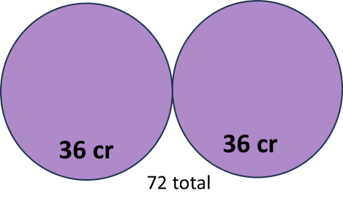
No shared credits allowed to meet 72 minimum credits earned.
Two 42 Credit Programs (Informal or Formal)
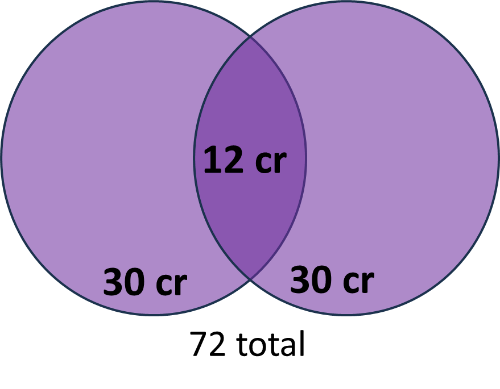
No more than 12 shared credits allowed to meet 72 minimum credits and 60 unshared credits.
A 56 and a 36 Credit Program (Informal or Formal)
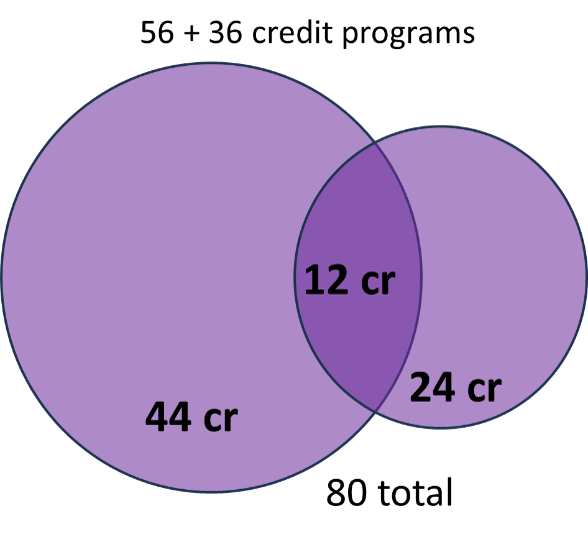
No more than 12 shared credits in order to meet 24 minimum unique credits requirement.
Two 72 Credit Programs (Formal)
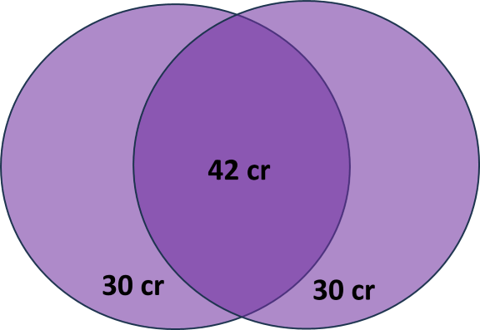
No more than 42 credits shared in order to meet 60 unshared credits requirement.
Two 72 Credit Programs (Informal)
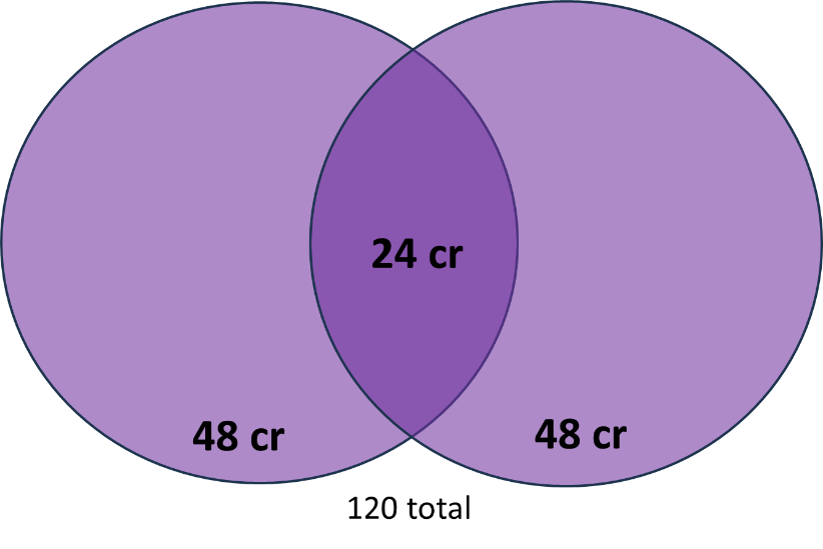
No more than 24 credits shared to remain under the 1/3 maximum credits shared requirement.
Formal or informal concurrent doctoral and master’s programs.
36 credit master’s and 90+ credit doctoral program
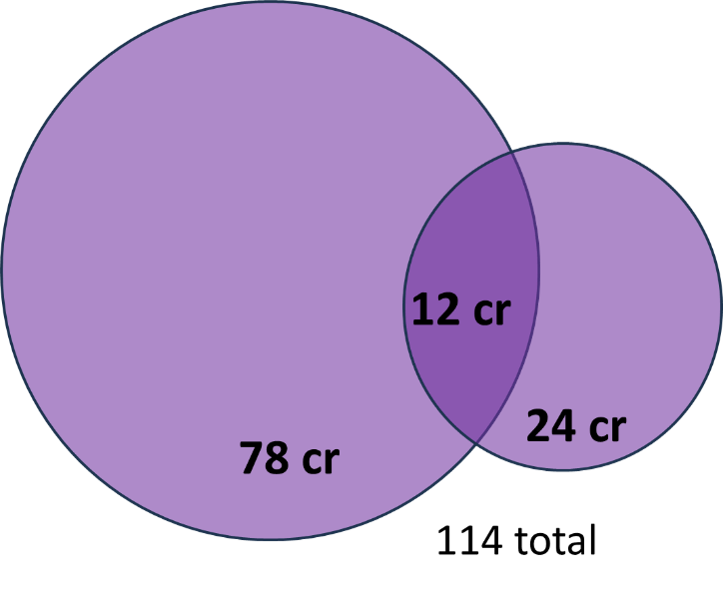
No more than 12 shared credits in order to remain under the maximum of 1/3 of required master’s credits shared with doctoral program.
45 credit master’s and 90+ credit doctoral program
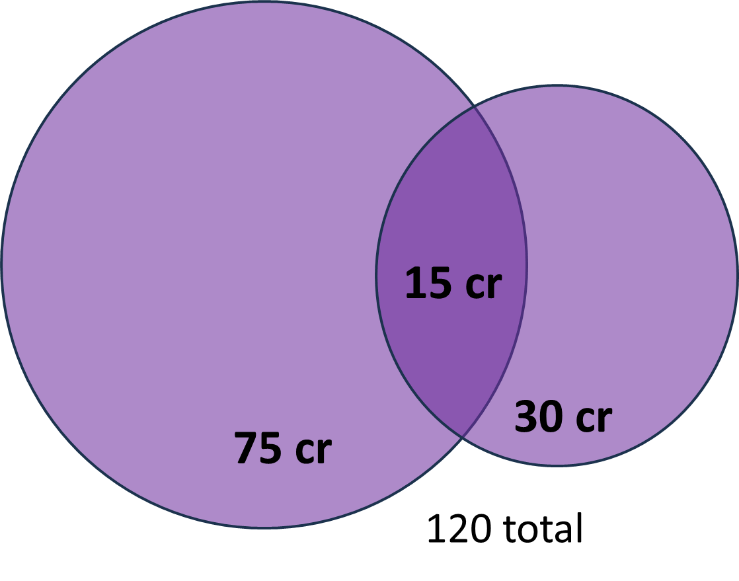
No more than 15 shared credits in order to remain under the maximum of 1/3 of required master’s credits shared with doctoral program.
Concurrent Research and Practice Doctorate
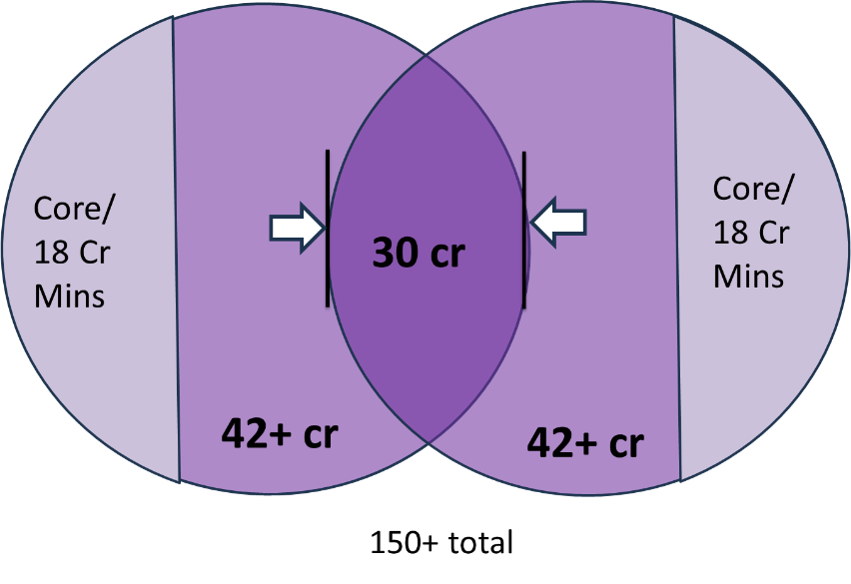
Maximum 30 credits shared. Core curriculum and 18 graded and 18 400/500 level course minimums cannot be shared.
Professional degree (blue) and graduate degree (purple; formal)
36 credit Master’s degree and Professional degree
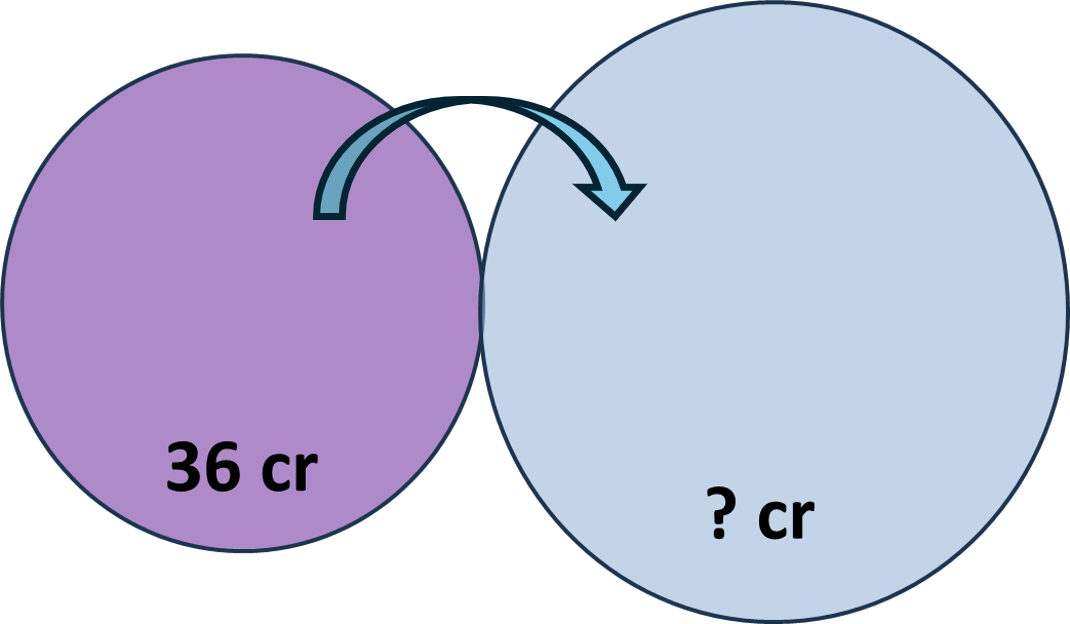
Minimum of 36 credits must be earned with graduate courses. However, professional degree programs can apply those graduate courses to their degrees.
54 credit Master’s degree and Professional degree
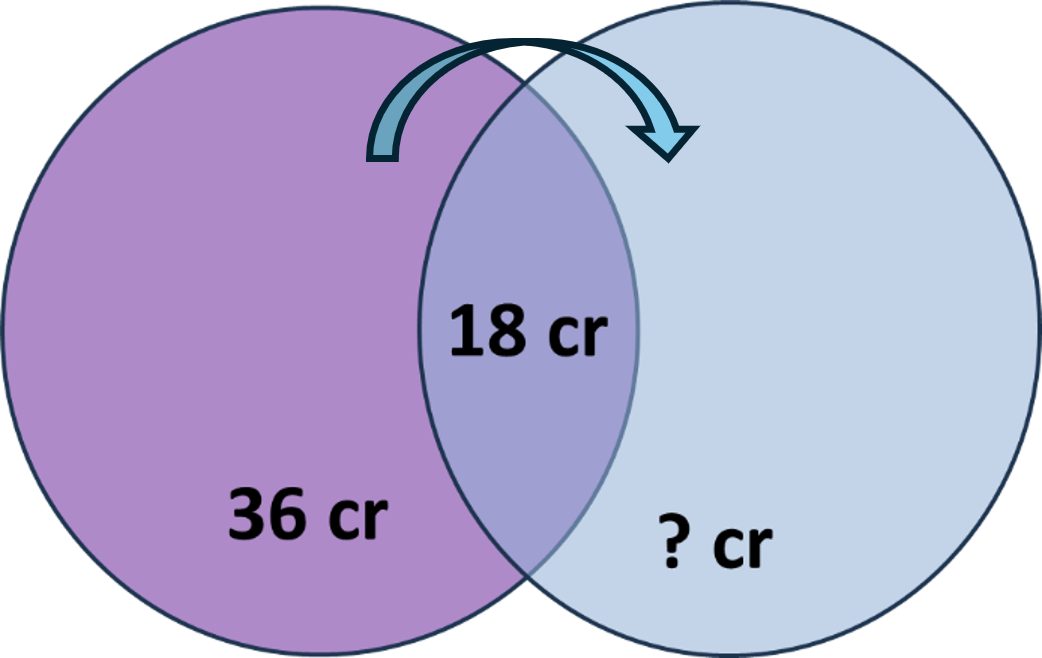
Minimum of 36 credits must be earned with graduate courses. Remaining credits (18 in this case) can be earned through professional degree courses. Professional degree programs can apply additional graduate courses toward their degrees.