Equity & Justice – Page 2 – UW Graduate School Skip to content

It’s the big 5-0 for GSEE!

In 1970, the Office for the Recruitment of Minority Graduate and Professional Students was established at UW. While GO-MAP* has undergone several name changes, it has always worked to improve access, support and well-being for underrepresented minority graduate students.

In academic year 2019-20, this amazing office turns 50! I have charged a planning committee to establish a year-long plan to recognize, celebrate and advance the extraordinary achievements of GO-MAP. The planning committee will develop programming, public events, communication campaigns and various other endeavors to mark this important anniversary. Here’s to 50 more brilliant years!

– Becky Aanerud
Interim Dean, Graduate School

*GO-MAP was the name of a program that is now called GSEE, the Office of Graduate Student Equity & Excellence. Learn more.

Research Culture and Climate: It’s On Us

NPR Science Correspondent Richard Harris spent a week at UW in January 2018, and some of us (including postdoc leadership) were able to spend time with him. His recent book brings together much of the published literature and personal stories about the “reproducibility crisis ” in research, biosciences in particular.

We pressed him to identify possible solutions, and — as this is a multi-faceted issue — there are several. As postdocs, we are the current and next-gen researchers and is truly up to us to collectively shift research culture and practice.

We feature a few of the top issues individual researchers can take on now, and you may consider how they can play into your current or next phase of work:

Seek diverse opinions. When developing a research methodology, study design, statistical analyses, or interpreting results for publication, consult with several different people with diverse expertise, experience and backgrounds. Daily judgment calls are made in research, and as you develop your best approach and continue your own training, it can help to get a wide breadth of input.

Be a good scientific citizen. There is a broader movement toward open science with the goal of accelerating progress, minimizing waste and identifying errors to improve our collective learning and potential impact. Since negative results, null findings, or reproductions of experiments are not published in peer-review journals (though Richard Harris says journals are changing practice on this and we need to catch up), it can help to have back channels to share findings, data sets, and analytic strategy so your field can move forward and we can use less research dollars on ineffective studies. There are badges and ways of annotating your CV that can help demonstrate your citizenship.

Get beyond impact factors. The editors of top-tier publications have banded together to speak against the use of impact factors in hiring or promotion decisions, as they don’t mean what we have come to make them mean within academia. Some Schools and Colleges, Universities, and even the NIH, are evolving their criteria to look for a broader spectrum of metrics to demonstrate real impact of your work. Whether your results allowed a research group across the country to move ahead and make a breakthrough, or your publicly shared findings resulted in a policy change, there are other ways to track the reach of your work. When seeking future positions — inside or outside academia — ask about promotion criteria. What things are genuinely valued? If the department is still just counting papers or dollars, and you do not share those values, you may do well to keep looking.

UW graduate student and Lindau Nobel Laureate Fellow Blythe Adamson wrote a book review of Harris’ work and summarized his tips for young scientists:

  1. Use valid ingredients.
  2. Show your work.
  3. No HARKing (Hypothesizing After the Results of the study are Known).
  4. Don’t jump to conclusions (and discourage others from doing this with your results).
  5. Be tough. People may try to discredit you if your hypothesis goes against their life’s work, or for any number of reasons.
  6. Be confident in your science.
  7. Recognize the tension between your own achievement and communal scientific advancement.

The more we talk together as a community, the more we learn, avoid reproducing outdated assumptions about what works, and begin shaping our collective futures. We encourage you to start a conversation in your research group or department, or come chat with us about any of these issues if you are looking for a way to get started! Office hours are always open.

The Grad School Guide – Equity in the Classroom: Putting names to faces

“How can I learn to recognize my students whose ethnicity is different from my own? I feel bad that it takes me much longer to remember their names and faces, and I have even mixed up some of the students, calling them by the wrong name.  They deserve better! I do study the photographs we get on MyUW of the students in a class, but that doesn’t seem to help much.”*

— Anonymous

Dear Anonymous,

Thanks for writing in! This is a complex and sensitive issue, and I really admire that you’ve recognized this problem and are taking the time to work through it. That’s a great first step!

To help answer your question, I’ve turned to my expert colleagues at the Center for Teaching and Learning (CTL) and FIUTS (The Foundation for International Understanding Through Students). I’ve provided each of their answers below, along with some additional resources related to names and facial recognition. Some of their general advice is: get to know your students better by playing name-related games and asking ice-breaker questions in class, and, if you’re still stuck, ask the students to re-introduce themselves during the first few weeks of classes or to keep a name card at their desk. Finally, do some self-reflection, and investigate whether any implicit biases might be affecting how you learn students’ names.

I hope this advice helps you to recognize all of your students and learn their names faster. You got this!

Sincerely,

The Grad School Guide


THE CENTER FOR TEACHING AND LEARNING
The CTL provided three strategies for learning to recognize your students: Collect more information; use other cues (besides their faces); and reflect on your biases and teaching strategies. Here they provide tips and ideas for pursuing each strategy.
Collect more information:

  • On the first day, use an ice breaker activity such as the “name story,” where students go around and share a brief story related to their name. This will help you attach the name to the person.
  • Ask your students to teach you how to pronounce their name.
  • Record students’ names and pronunciations on the UW photograph sheet when they introduce themselves.
  • Consult websites to learn name pronunciations (some websites included below!)
  • Before or after the class, chat with students to use their names.
  • In the first few weeks of class, have students say their names first when they ask a question.

Use other cues:

  • Have students use name tents. Collect them from students after every class and have them pick them up again to use at the beginning of the next class.
  • There are other ways to remember students than their faces: consider the tone of their voice, their hairstyles, their posture, clothing style, accessories, etc.
  • Use Canvas to have students share stories of their names and/or introduce themselves sharing their interests in the course or other interests (favorite places, foods).

Reflect:

  • Ask yourself why as an instructor or TA you are having a particularly hard time remembering some students’ names. We all hold implicit biases: attitudes and stereotypes that can affect our behaviors without us realizing. You may want to learn more about implicit bias: if so, check out the Kirwan Institute for the Study of Race and Ethnicity and Harvard implicit Bias tests online. These tools can help you find out where you might have blind spots and what areas you might want to work on.
  • Use active listening strategies. Reflect on how you listen:
    • Are you allowing the student time to express themselves?
    • Are you concentrating on what the student is saying?
    • Are you attentive to verbal and non-verbal cues?

FIUTS
Ellen Frierson and Era Schrepfer, at FIUTS, offered a number of strategies for better remembering students and connecting their names to faces. Also, Ellen wants to assure you that “the longer I work with students, the better I get at learning names quickly (and I’m generally pretty bad with names across all demographic categories!). So, just a word of encouragement that this is a skill you truly are likely to get better at if you work at it.”
Here are their tips!

  1. It’s easier to remember someone’s name when you know something about them. Create an activity at the beginning of the year/class that gives you some context about each student. Maybe a fun icebreaker where they all make a name tag with a food they like that begins with the same letter as their name? If you can collect them at the end of the day, even better, as it gives you something to study with!
  2. Spend more time with people who look different from you! You’ll get better at remembering people’s names and faces with more practice. It sounds like you’re already being really thoughtful about examining your own biases, so being more conscious in general about how much time you’re spending with people from their same racial/ethnic background versus connecting more with others might be useful.
  3. Practice the usual memorization tips more often until you at least know all the names. Carry your list with you. Look over your list at different times of the day, while you’re doing other things. Record yourself saying the names and listen to the recording.
  4. Pair up with another T.A. and “introduce” each of your students to them (and vice versa), telling them something about each student.
  5. Focus on memorizing the stressed syllable of each name, and possibly coming up with an association just for that syllable. (So if the name is Xinlu, focus on remembering the “Xin” part, maybe by thinking of a rhyming word like “pin”). When I (Ellen) was a classroom teacher and trying to learn lots of names at once, I’d try to notice one particular feature of the student’s face and pair that with a mnemonic device for their name to help a) remember their name and b) connect it with that person: “Frank has freckles” or something silly like that. If you are having trouble distinguishing people of a specific race or ethnicity, this approach might also help you to start noticing the ways in which facial features vary among people of the same race or ethnicity.
  6. Use name tents in class if you need to. Have the students make name tents on the first day and collect them to be distributed in each class. You can practice by handing them out at the start of each class and it will reduce the chance that you will call on the wrong person.
  7. Create learning activities that will help you to learn as much as possible about each of your students: having them share helps both of you. Be sure to remind everyone to introduce themselves before sharing with the class, whether you already know their name or not.
  8. Don’t worry if you forget someone’s name, just ask and be honest about the challenge. It’s totally OK to say, “I have so much trouble remembering people’s names! Please help me by reminding me and let me know if I get it wrong!”

ADDITIONAL RESOURCES
Here are some additional resources you might find useful, compiled by the CTL, FIUTS, and Graduate School staff:

*This question has been lightly edited to preserve anonymity. 

Ask the Grad School Guide is an advice column for all y’all graduate and professional students. Real questions from real students, answered by real people. If the guide doesn’t know the answer, the guide will seek out experts all across campus to address the issue. (Please note: The guide is not a medical doctor, therapist, lawyer or academic advisor, and all advice offered here is for informational purposes only.) Submit a question for the column →

Fostering Inclusive Classrooms as a TA

How do we, as TAs or RAs, work to include all students we work with, given the difficult times the nation is in? — Anonymous 

This week’s answer is courtesy of Gonzalo Guzman, pre-doctoral instructor in American Ethnic Studies and the College of Education. 

To say we live in “difficult times” would be an understatement. This is why it is our duty as TAs, RAs, or Instructors of Record to make sure that our students feel included in our classrooms. By “inclusion” I mean building and fostering a community in your class that validates and respects students. In difficult times, the community you build in your classroom can be a refuge, where students focus on learning and know that their experiences matter to you and their colleagues in the class.

Simply put, inclusion and validation of your students should be central to your philosophy of education/teaching. Students know when TAs/RAs/Instructors care about them, are accessible, and make efforts to include them. This is not content bound, but is a philosophy of work. For instance, a TA can teach content from a discipline or field that focuses on topics such as social history and identity constructions, and still develop a working relationship or classroom where their students don’t necessarily feel included or welcome. Even if the content reflects most of the students’ realities, if the teaching style and the overall classroom environment do not, then students will not feel a part of the learning environment.

Including all the students we work with is relational, continuous work, and it doesn’t need to be a  drastic transformation. It can simply start with check-ins with your students. Other ways to do this are to make assignments more accessible and responsive, adapt student input into your work, and make a collaborative space where your students know you are working together in a shared classroom. How you do this is up to you; it is dependent on the community you make and the relationship you have with your students. How do we include all of our students in these difficult times? We do the work. We teach and work to the benefit and developing lives of our students.

Making UW Your Own – #UWGradSuccess

Recently, two graduate students from Chemistry, Sarah Vorpahl and Nick Montoni, organized and led a day-long gathering focused on Strengthening STEM through Diversity. The meeting brought together leaders from UW student organizations, as well as faculty, staff, and community partners to collectively discuss issues of equity in STEM and to develop concrete strategies that will promote a climate of inclusivity for multiple underrepresented communities studying, researching, and working in STEM disciplines.

Core Programs attended and gathered several pearls of wisdom from the plenary speaker UW bioengineering faculty Wendy Thomas, and from the student leadership panel, with representatives from Women in Chemical Sciences, oSTEM, SACNAS, AISES, and the student union UAW 4121. We will be sharing highlights and insights, and working on larger institutional guidance, over the next several weeks as the ideas and opportunities identified at the event will contribute to a larger learning environment where all students can thrive at UW. Here is just a start:

Imposter syndrome. “Imposter syndrome” is familiar to many in Graduate School (and beyond): that feeling that you aren’t smart enough or that you might not have what it takes to succeed. Here’s the thing, you are not alone! Surrounded by smart people, many of us may feel we don’t fit in. Some advice has been to “fake it til you make it.” We agree and yet this should not be confused with “suck it up and deal.” That is, if there are things within your grad program or research group that seem odd to you – ask questions, talk to a peer or trusted colleague to check out your observations, seek allies to support you and who can also speak up and ask for changes. Asking for what you need to thrive is a big part of making your graduate experience your own and one in which you can shine. Shifting our academic culture and landscape to a place that encourages human connection and growth will take all of us–from interpersonal changes to institutional, structural level changes.

Develop a growth vs. fixed mindset. Fixed mindset is the belief that “some people just have what it takes,” while others will never have what it takes. It is the thinking that some individuals are automatically good at understanding concepts and theories in their discipline, writing, acquiring research funding, public speaking, and so forth. This is simply not true. Being a graduate student is about developing and honing your skills, knowledge-base, and competencies over time. It is a process. In this regard, we encourage you to shift towards a growth mindset. If you are experiencing a roadblock in graduate school, it is more than likely that a peer or faculty has experienced a similar challenge. If you are part of the 1-in-3 graduate students who are coping with issues related to mental health, utilize campus resources like the DRS. DRS staff can help you draft an accommodation plan that is personal, confidential, and can set you up for success. Graduate school is a marathon, not a sprint, so pace yourself and give yourself permission to grow.

Find a mentor. There are numerous reasons why you seek out mentors in graduate school. An advisor can give you research direction, but a mentor really invests in you. National guidelines are now pointing to building a mentor team for academic direction, career guidance, and personal support. Mentors can make the difference between surviving and thriving – seek them out and invest time to build your team. As keynote speaker Dr. Thomas shared, when she finally had a mentor who was equally excited to talk to her about her research results, as well her feelings about the research, she knew she could stay in academia.

We thank the student event organizers, student organizations, and the UW programs that signed on as co-sponsors, for their dedication and hard work in investing in making UW a better place for all of us! Keep it coming. #Together #DiversifySTEM #UWGradSuccess

Best Regards,

Kelly, Jaye, and Ziyan
Core Programs Team
Building Your Roadmap Through Graduate School

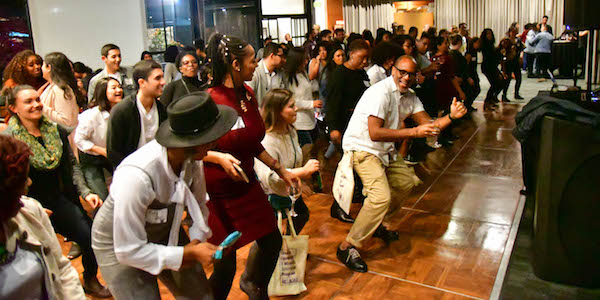
The Graduate Student Equity & Excellence (GSEE) program invited Core Programs to facilitate a Power Hour event called Building Your Roadmap Through Graduate School. We knew the students were the ones who really had the insight here, and we worked with several outstanding GSEE graduate students including Priya Patel, Osa Igbinosun, Greg Diggs and Juan Gallegos, to plan and facilitate the discussion. So many great insights were shared during the panel and small group discussions that we wanted to share out some of the insights with our broader UW grad student community.

Here are just a few:

Define success on your terms. It may not feel like it at times, but you can influence your pathway through graduate school. Periodically check in with yourself by asking the following questions: First, how are your research interests, courses, labs, or professional work meaningful to you? We know you won’t like every course, theory, lab work, or practicum—but overall, how is being in your grad program meeting your needs?  Second—and this is related to the first point—are you setting personal, academic and career goals that are realistic and achievable? An individual development plan can help you keep track of your goals. Finally, how can you utilize feedback from faculty, peers and professional colleagues to enhance or strengthen your knowledge and skills? When people in your field give you feedback with constructive value, take it as a compliment that they have faith in you to grow in your work and career.

Be proactive and reach out for support. Taking the initiative to build relationships in graduate school is crucial to your success. Yes people are busy in and outside of academia, but more often than not they will make time to connect with you if you are consistent, proactive and prepared to meet with them. Which people do you need to connect with to get the support you need to thrive in grad school? Who do you need to network with outside campus to achieve your career goals, and how will you find them? What meeting agenda items and questions do you need to have ready to schedule that meeting via e-mail or phone? For example, the UW College of Education offers an excellent resource (revise and adapt as needed) that will help you prepare for your faculty advisor meetings.

Remain open to possibilities. Many of you already have a specific research and career focus upon starting graduate school at the UW. This is excellent, because you have a vision of what you want to achieve for yourself. At the same time, any of the following scenarios can happen: you read a text that a sparks a different trajectory for your thesis or dissertation, a conversation with someone inside or outside of the university inspires you to think about diverse career paths, or maybe after a few meetings with your advisor you realize you’re not a match. Any or all of these can be anxiety provoking (totally normal, btw) and be viewed as opportunities for you to think expansively about your educational, professional and interpersonal goals. What lessons can you learn from those situations about your interests, strengths and passions?  Are you allowing yourself to be curious to explore different goals?  What steps would you need to take to accomplish those goals? Remaining open to possibilities can help you see goal setting as a process rather than an end result.

Many thanks to Priya, Osa, Greg and Juan for their permission to adapt these insights for the Core Programs newsletter and for collaborating with us for the Power Hour event, held on October 20, 2015.  Thanks also goes out to GSEE staff Vanessa Alvarez and Cynthia Morales for the initial ask to collaborate!