Finding the path
Ph.D. candidate Ramon Johnson tackles his dissertation with love and accountability
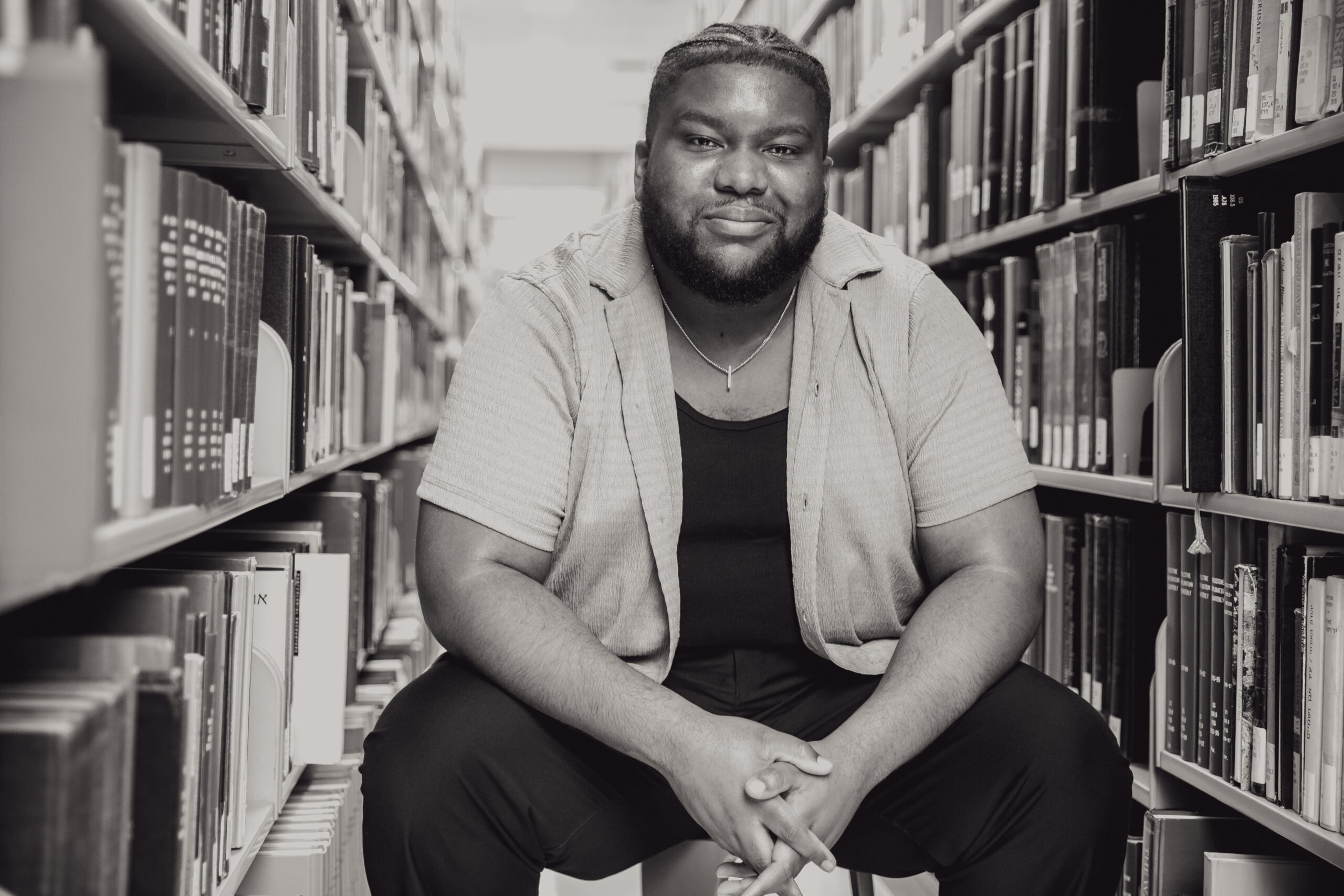
Ramon Johnson, Ph.D. candidate in Gender, Women & Sexuality Studies at the University of Washington, never set out for his academic journey to become a pilgrimage. From Atlanta to New York to Seattle, he has crossed regions, institutions, and ideologies in search of something deceptively simple: the freedom to study Black, trans and queer lives without apology.
“I sent up a prayer,” recalls Johnson, “and right after, I got my first rejection letter. But I knew the right path would open.” What followed was a journey shaped as much by resistance as by brilliance — and one that continues to redefine the possibilities of feminist and trans studies.
A Scholar Formed Through Activism
During his time at Morehouse College, Johnson’s intellectual curiosity collided with the reality of institutional homophobia and transphobia. “I was politicized at Morehouse,” he says. “There was so much queer and trans antagonism happening on campus. It infuriated me.”
Johnson joined the campus LGBTQ+ organization and began organizing around gender and sexuality issues. Often, answers to the injustices he witnessed weren’t readily available, so he sought them out. He found courses at Spelman College, the sister college nearby, that would impact his academic career; Black Queer Studies, Intro to Feminist Theory, Women’s Studies.
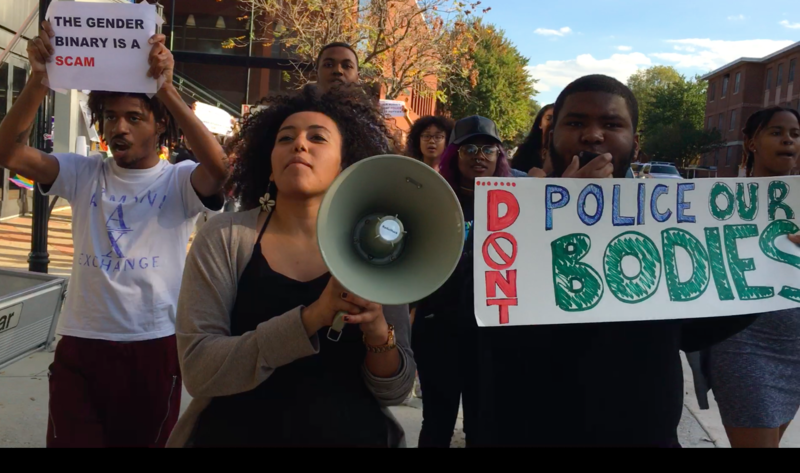
“It was there that I finally got the language for the systems of oppression I’d been battling,” says Johnson. “That grounding shaped everything.”
It also sparked bigger questions – ones he is still trying to answer through his dissertation.
A Dissertation Rooted in Love, Critique, and Accountability
Johnson’s dissertation, The Trill of Progress: Politics and Paradoxes of Black, Transgender and Queer Organizing at Single-Sex HBCUs, is both an archival and ethnographic exploration of progress narratives at Historically Black Colleges and Universities.
He examines the tension between institutional pride and institutional harm — how campuses celebrate inclusion on the surface while policing gender expression behind the scenes. “People love progress narratives,” Johnson explains. “They’ll say, ‘It’s better late than never,’ or ‘This would’ve never happened back in my day.’ But those narratives can obscure real violence.”
His research interrogates how institutions can claim progress while simultaneously restricting the lives of the very students they claim to welcome. “I’m trying to show how techniques that appear inclusive can actually stifle efforts to eliminate violence,” Johnson says.
From the South to the Pacific Northwest
Johnson began his Ph.D. in the middle of the pandemic, just after virtually defending his masters thesis in his mother’s living room.
“Grad school can feel isolating,” admits Johnson. “I was very serious and intentional about finding community.”
He found it through the Black Graduate Student Association (BGSA), through church, including joining the praise and worship team, through Omega Psi Phi Fraternity Incorporated and through friendships that grew slowly but steadily. “It developed over time,” says Johnson. “But I’m grateful. I’ve stuck it out.”
The transition from an all-Black educational environment to a predominantly white institution was striking. “I can count on one hand the number of Black tenured faculty,” Johnson says. “It can be discouraging.”
Yet that very challenge deepened his commitment to mentorships: “I want to lift as I climb. The same way mentors poured into me, I want to encourage other students of color to pursue their Ph.D.’s,” says Johnson.
Funding Cuts, Resilience, and the Drive to Continue
Political attacks on gender studies and Black studies have deeply affected departments 12 like his. Funding has been cut, and Johnson has had to work harder to secure fellowships and scholarships. “I was anticipating the cuts,” says Johnson. “I applied for everything I could find.”

His persistence paid off as he was awarded the GSEE Final-Year Dissertation Fellowship and another GSEE award earlier in his program. “I was first nominated in 2023 by Dr. Bettina Judd. This year, my advisor and dissertation chair, Dr Kemi Adeyemi supported my application,” Johnson says proudly. “That support meant a lot.” These fellowships are awarded based on academic merit and provide tuition, insurance and a stipend of approximately $30,000
Being involved with Graduate Student Equity & Excellence also helped him find community and leadership opportunities. “Serving with BGSA and receiving support from GSEE shaped my time here,” says Johnson. “It was a space where I felt seen.”
For those considering graduate school, Johnson offers this advice:
“Do as much research as possible. Know the faculty. Know if your interests align. Cast a wide net — don’t count yourself out. And have a clear plan. If you don’t, you’ll be lost. And grad school is not a place for that.”
And perhaps most importantly, he urges future scholars to find their people. “There will be professors who don’t have the capacity to support you,” says Johnson. “But there will also be professors who pour into you — who challenge you and push you towards your academic goals.”
By: Tatiana Rodriguez, UW Graduate School
Published on December 11, 2025